A simulated world
requires a host.
No confirmed simulation substrate. The central problem is evidence that could distinguish a host from the physical rules observed inside a world.
Inspect the evidence boundary
01 / The conditional argument
The simulation hypothesis and its assumptions
The simulation hypothesis depends on assumptions about consciousness, computational capacity and future civilizations. Quantum metaphors do not provide evidence or a probability estimate.
Read the analysis6 minAn internal description can be precise while its underlying cause remains unknown.
Evidence boundary / Compare the claims
Different claims.
Different burdens of proof.
Choose a claim to inspect its constraint.
Premise → conditional argument
A possible host is a premise.
An argument may assume that simulated observers can exist and that hosts would create them. Its conclusion depends on those assumptions.
ConstraintLogical consistency does not establish that a host exists.
Detecting a boundary.
Crossing a boundary.
Evidence, intervention and independence are separate claims.

02 / Interface / Mechanism required
Simulation hypothesis: proposed tests and the escape metaphor
Simulation hypotheses require testable predictions. Proposed escapes lack an established physical interface or demonstrated mechanism.
Read the analysis8 min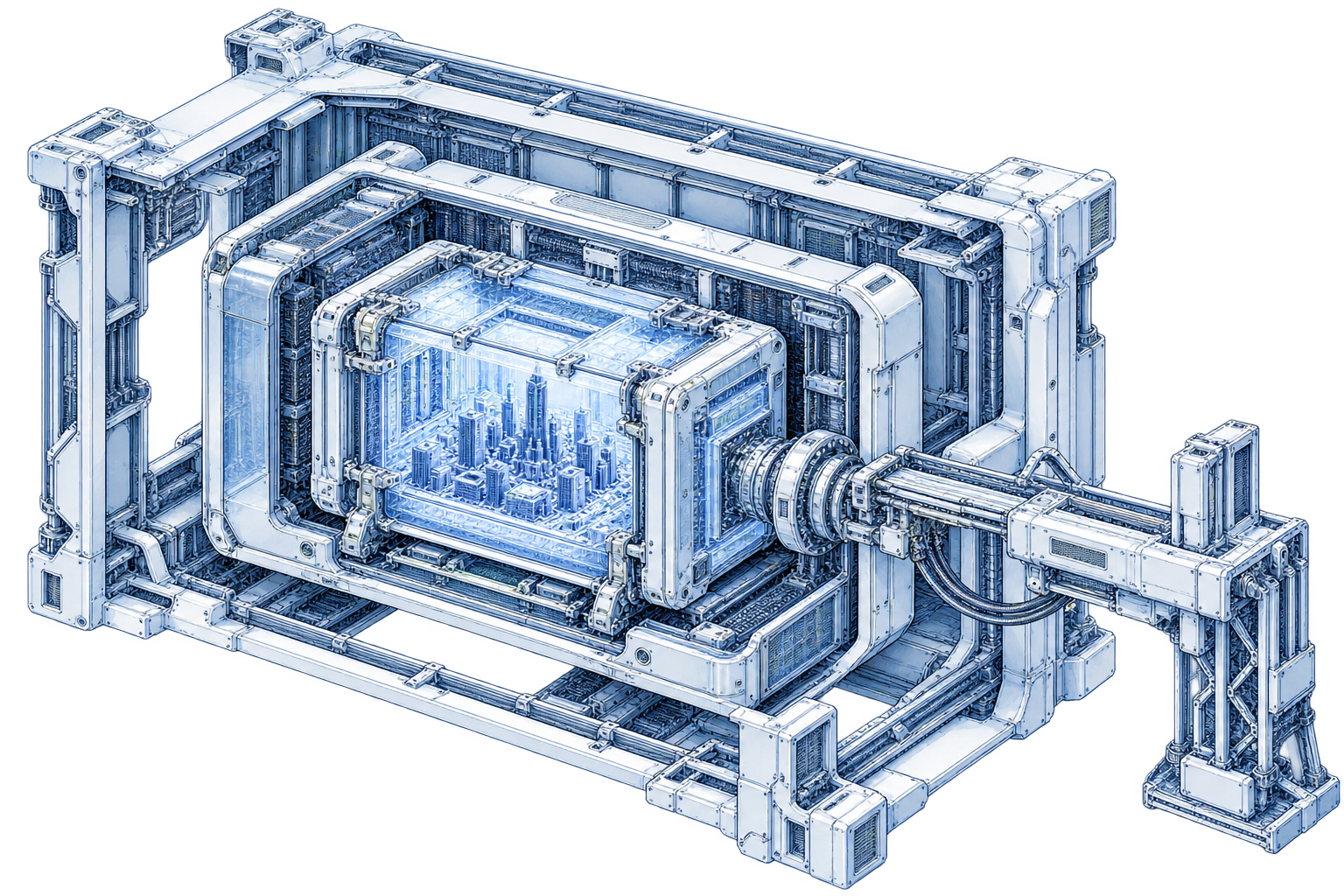
03 / Dependency / An unresolved root
Simulation interfaces and unresolved dependencies
Hypothetical host access could establish a dependency. It would not resolve ultimate reality, personal continuity or an escape mechanism.
Read the analysis6 minA rule can generate structure.
A physical theory must predict it.

04 / Emergence / From rules to predictions
Cellular automata: emergence and physical limits
A single-seed cellular automaton produces structure under fixed rules. The model does not establish a physical cosmology or a Planck-scale grid.
Read the scenario6 minA computational pattern illustrates a mechanism. Agreement with measured physics is a separate requirement.
Physical limits.
No host implied.
Optical correlations and finite signal speed constrain physical models. Neither establishes an external computer.
05 / Quantum optics / Conditional patterns
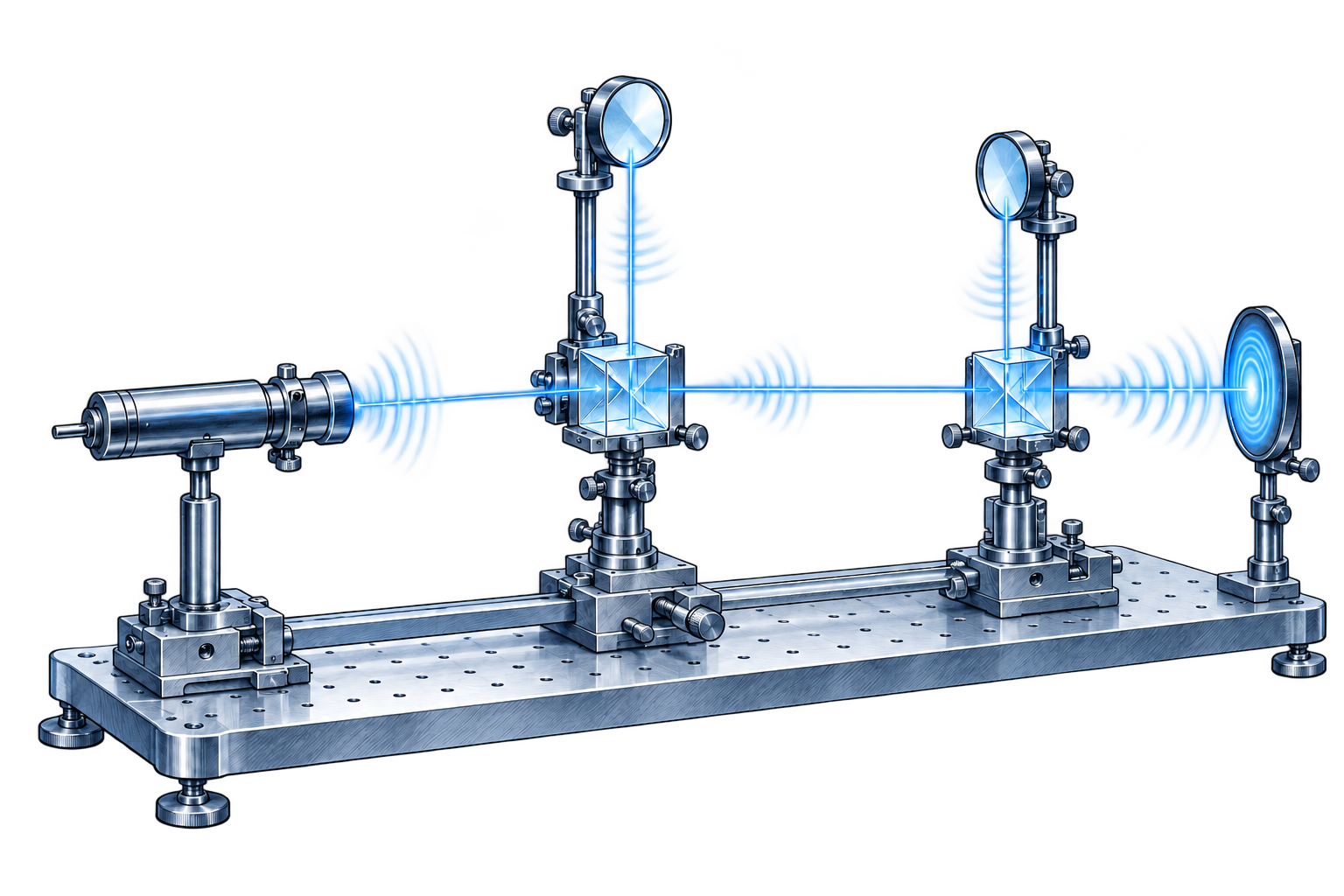
Quantum eraser: conditional interference
Selected coincidence records reveal interference while the complete detection distribution remains unchanged. The explanation separates path information from measurement order.
Read the analysis6 min
06 / Relativity / Causal limits
The speed of light: a limit on influence
The invariant speed imposes a finite delay on communication and causation. Apparent exceptions describe medium, geometry or measurement rather than a signal exceeding c.
Read the analysis6 min