Skip to contentSIMULGENCEQuantum Lab
03 / Scenario atlasAltered premises. Conditional consequences.

Potential
realities.

Hypothetical worlds

Altered physical rules, ownership claims and institutions produce conditional consequences under stated assumptions.

Examine a premise

01 / Physical rules / 8 min

Reduced gravity and adaptation to rising oceans

A hypothetical gravity decline changes coastlines, settlements and transit. The scenario traces adaptation under altered physical assumptions.

Read scenario
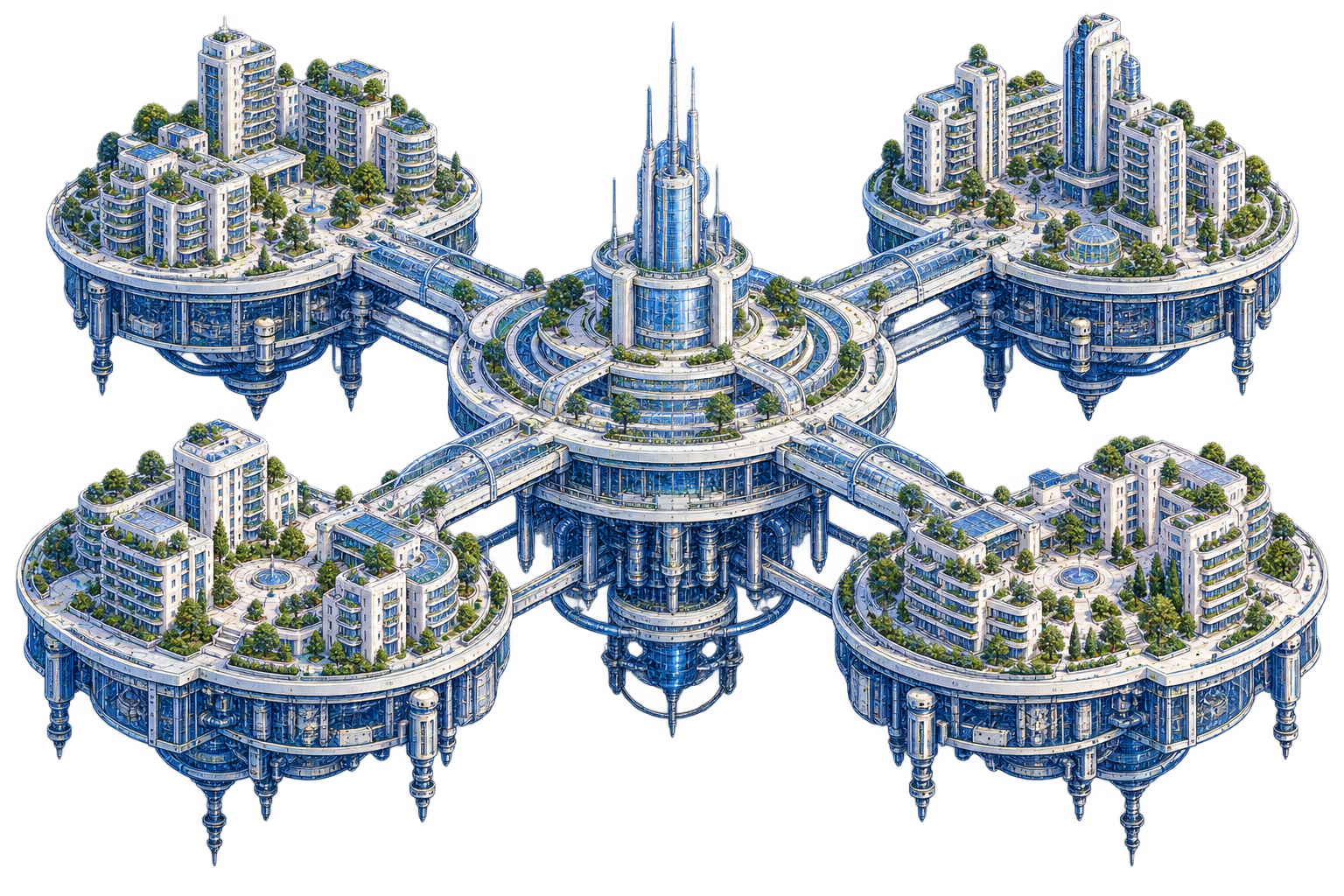
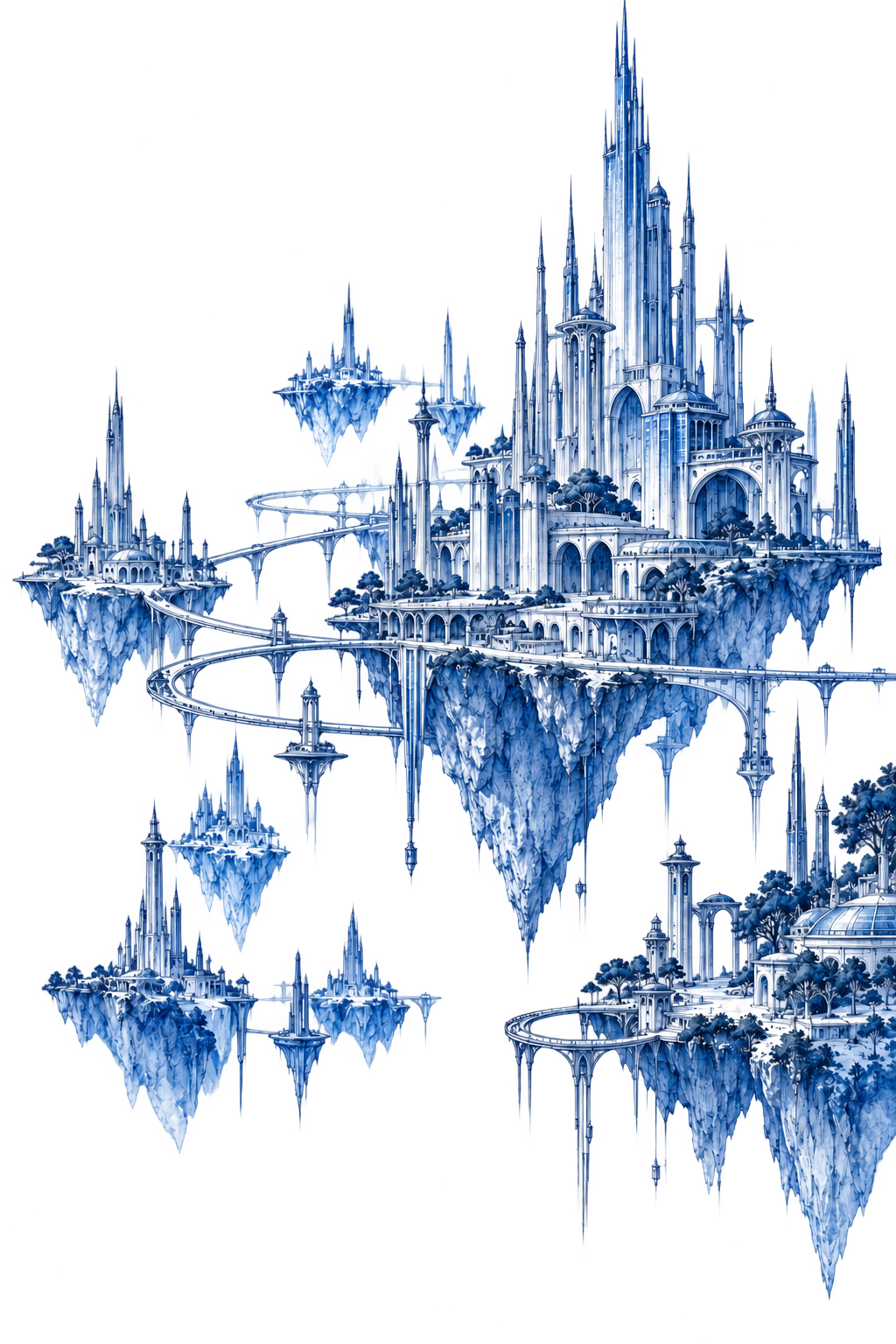
An intricate blue architectural study of suspended settlements in an invented low-gravity world.
Imagined adaptationTethers / Ballast / Low-gravity transit
Altered premise
Gravitational acceleration declines.
Narrative consequence
Structures, coastlines and transit require adaptation.
Limit
Invented physics. No observed gravity shift.

Reading method / Select an assumption

The premise
sets the boundary.

Selection marks related studies. All scenarios remain available.

Assumption

Gravity weakens. Signals slow. Atomic behavior changes.

ConstraintThese changes are invented. The narratives do not supply a physical mechanism that makes them possible.

Compare the physical scenarios

02 / Two failures of constancy

Signal delay and atomic instability.

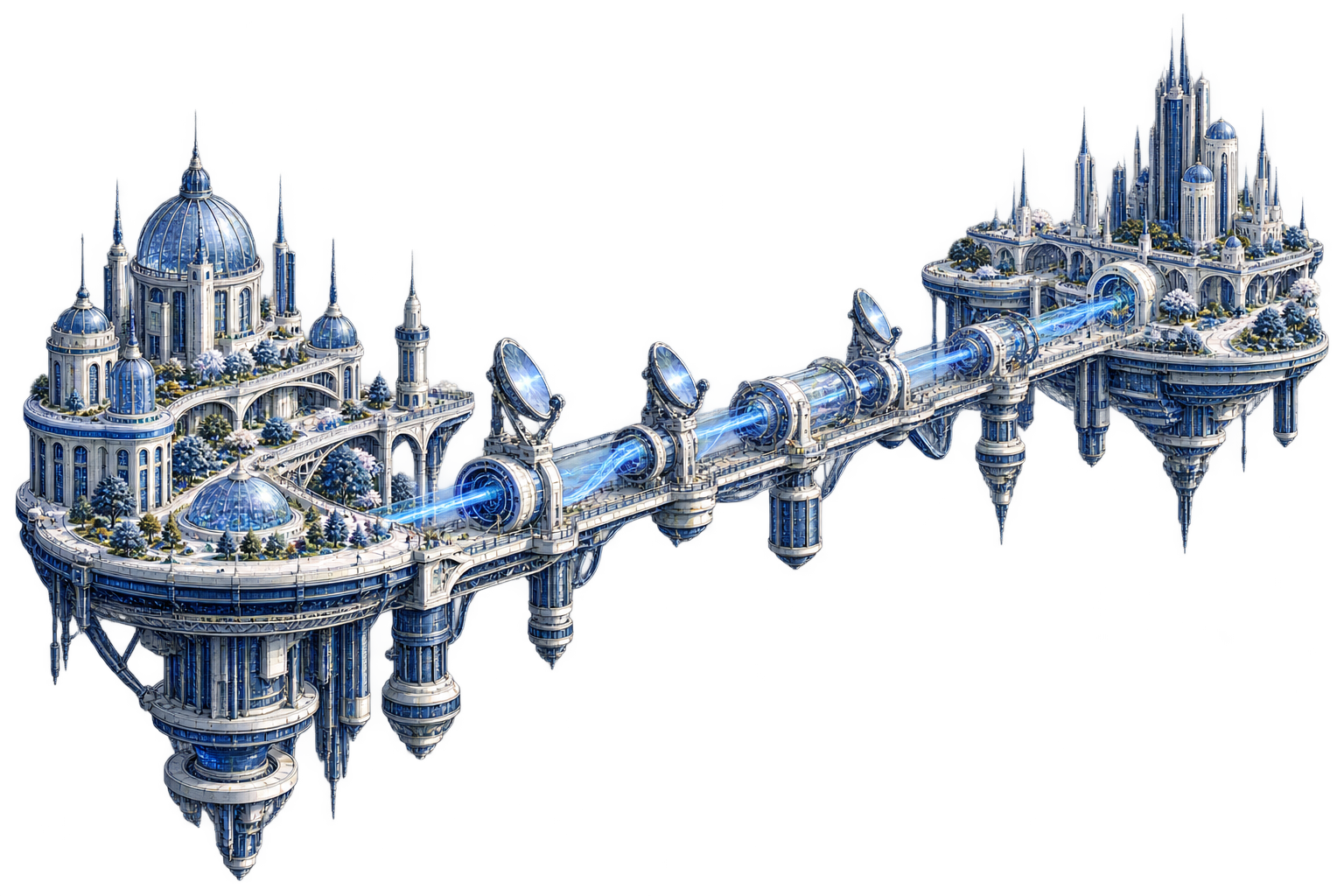
A hypothetical city divided by a long optical relay route, illustrating adaptation to the scenario's altered signal speed.
Signal propagation / Hypothetical decline

02.1 / 7 min

A changing light speed and civilizational adaptation

A hypothetical decline in light speed disrupts measurement and infrastructure, forcing institutional adaptation under altered physical rules.

Read scenario

Consequence in the scenarioStable timing fails. Cities reorganize communication and power use.
02.2 / 8 min

A changing spectral line and the limits of explanation

A hypothetical shift in spectral lines forces a reassessment of calibration and physical law. The cause remains unresolved.

Read scenario
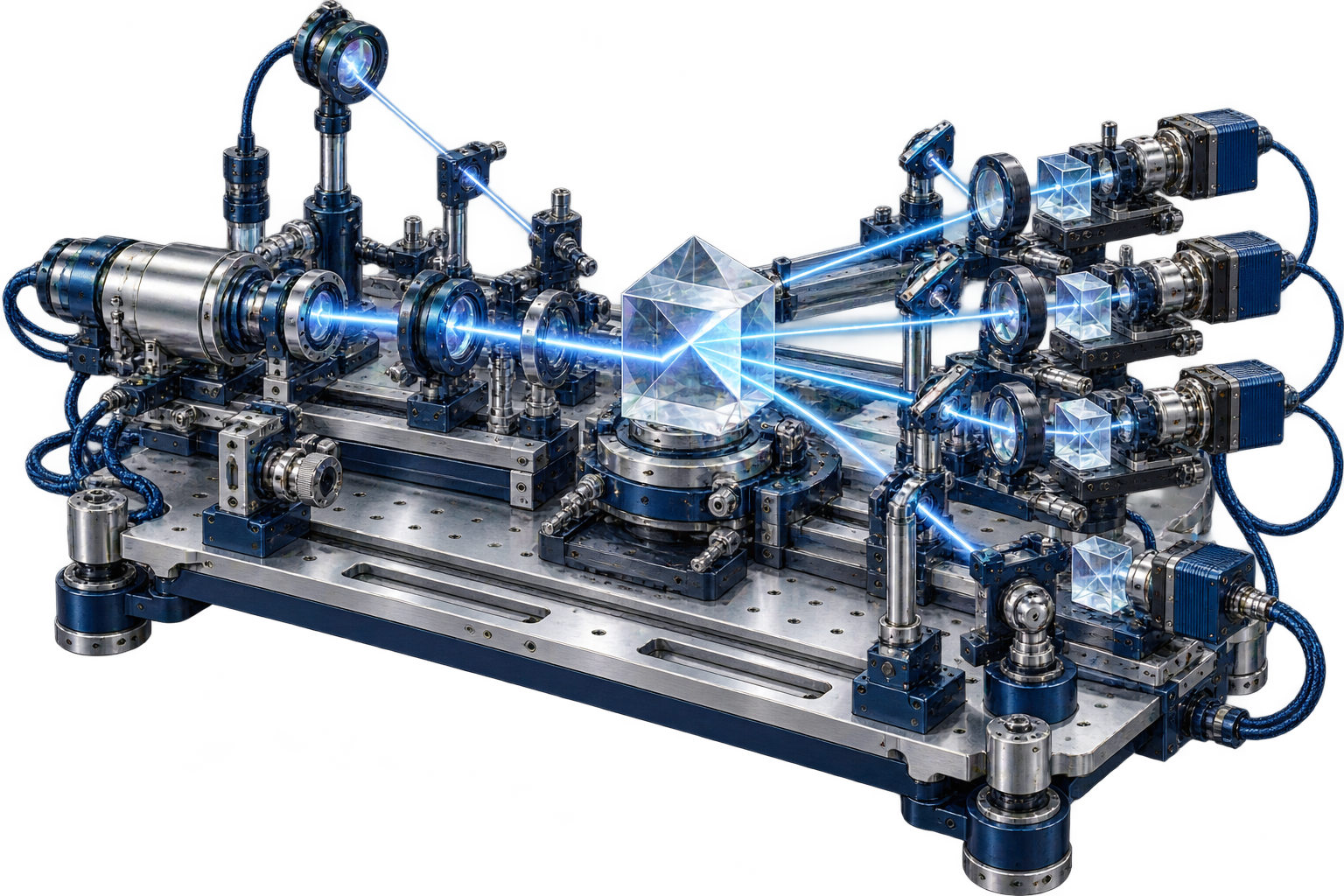
An elaborate spectroscopy assembly with reference channels and optical detectors, used to illustrate a fictional calibration anomaly.
Spectral drift / Invented atomic instability

Consequence in the scenarioChanges in atomic behavior propagate through electronics and biology.

Evidence boundary

These narratives alter the rules. Simulation analysis examines what evidence could distinguish a hypothesis about those rules.

03 / Ownership counterfactualDated 2024 / Imagined horizon 2030

Equal initial claims

Equal global wealth shares: a 2025–2030 thought experiment

A dated counterfactual allocates equal claims to global wealth in 2025, then models ownership, voting and access through 2030.

Read scenario
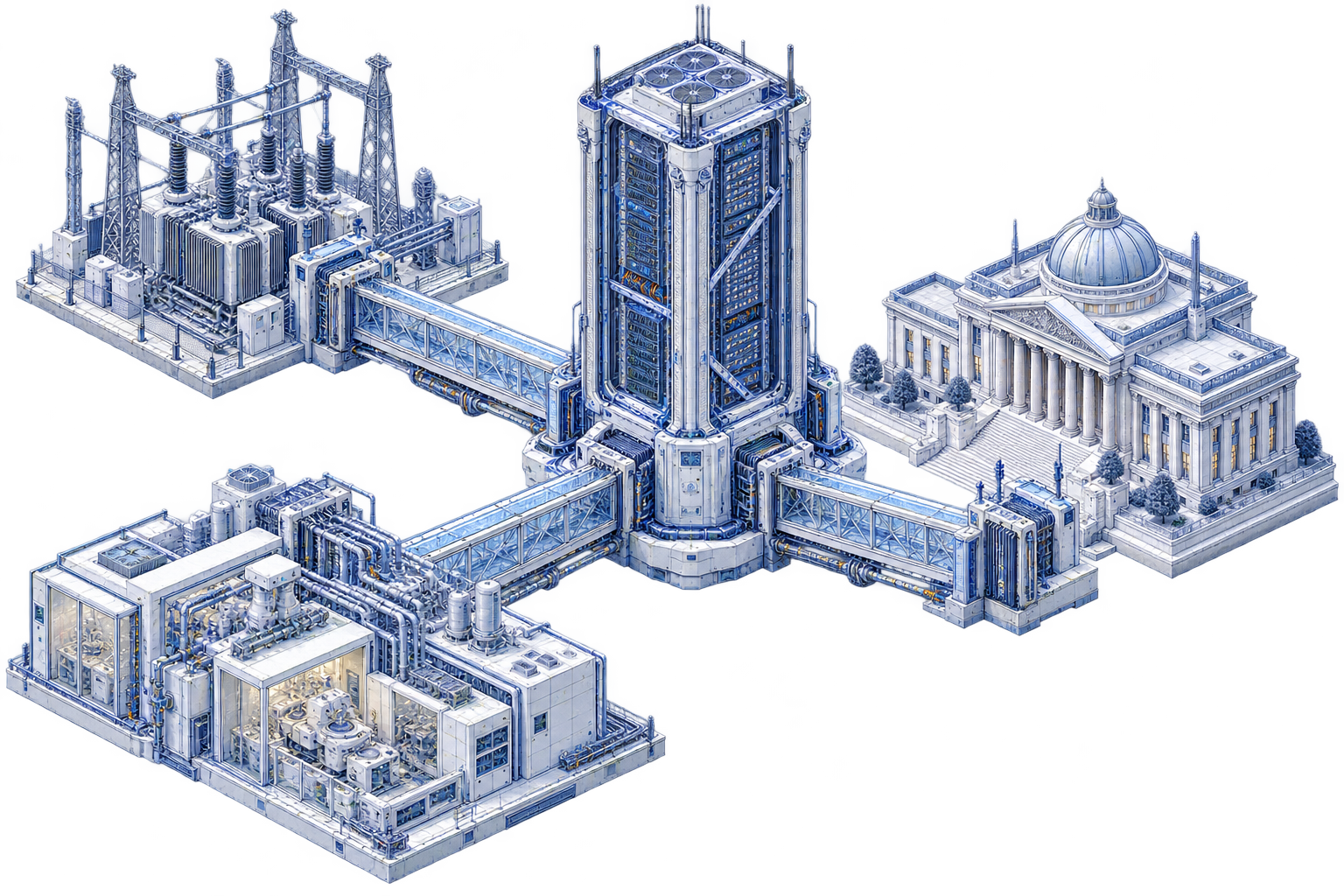
Four model neighborhoods linked to shared civic infrastructure, illustrating a hypothetical equal-access arrangement rather than a promised outcome.
Public infrastructure / A hypothetical equal-share economy

01 / AllocationEqual claims at the starting point.

02 / GovernanceVoting and intermediaries shape authority.

03 / AccessHousing, services and productive capacity remain constrained.

Related analysis: automation does not determine who owns its output.AI power

04 / Institutions under altered rules

Institutional control and individual autonomy.

Payment, private space and legal standing define different boundaries of authority.

A / Payment as permission

A compute junction connecting infrastructure and institutions, illustrating a scenario of payment-based institutional control.
Invented institutions / Cashless control

9 min / Political scenario

Digital currency, social scores and compliance

A political scenario links digital payments and social scores to institutional control. Restrictions on cash limit independent exchange.

Read scenario
Assumed arrangement
Cash is progressively restricted. Digital payment becomes a mechanism of compliance.

B / Private space removed

7 min / Imagined society

Privacy, property and individual limits in a collective society

A hypothetical society without private property or protected private space uses collective decisions to regulate individual conduct.

Read scenario
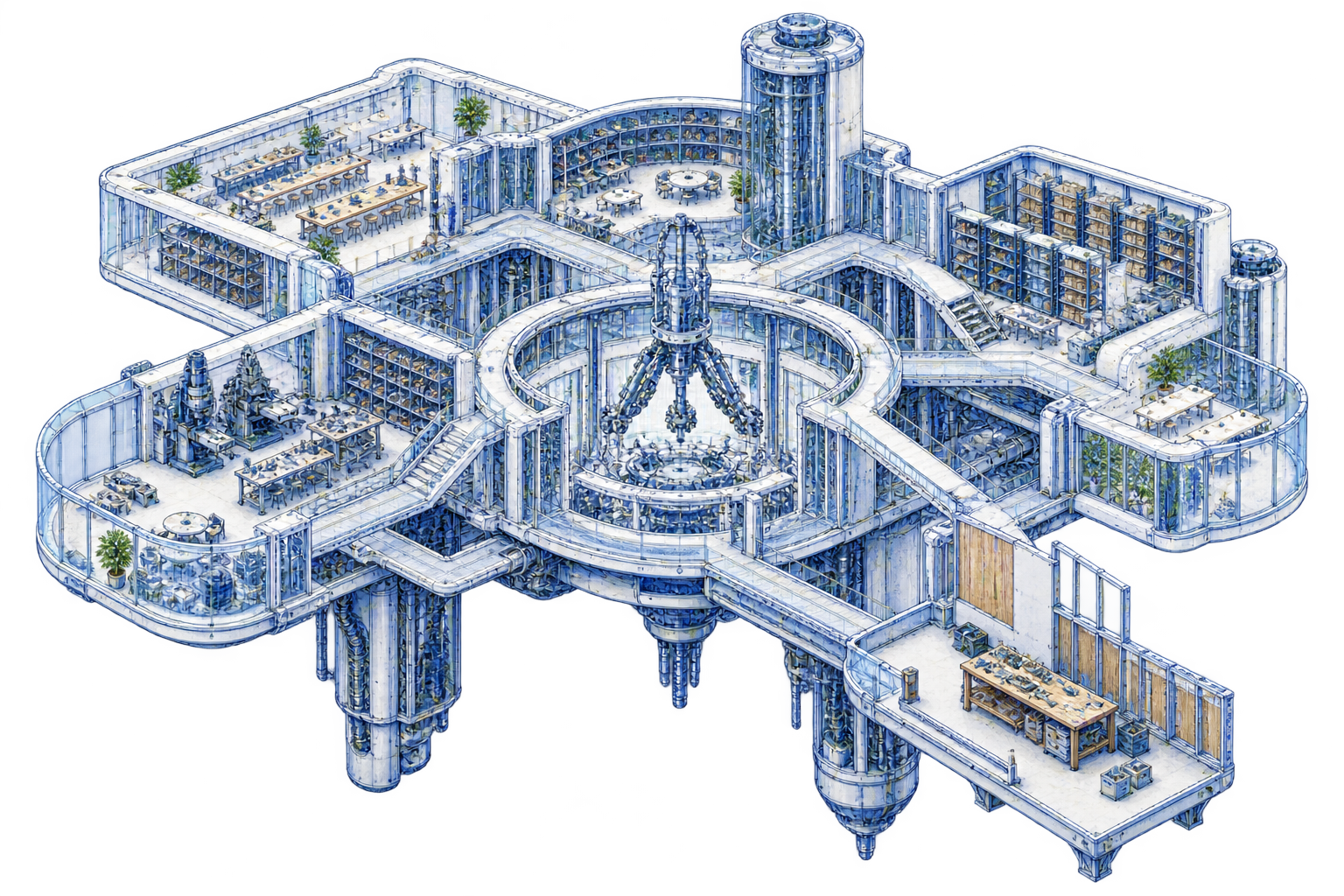
A cutaway communal complex with open living areas and shared workshops, illustrating the absence of protected private space in an invented society.
Collective decisions / No protected personal space
Assumed arrangement
Property and personal space are communal. Votes regulate conduct and the public record.
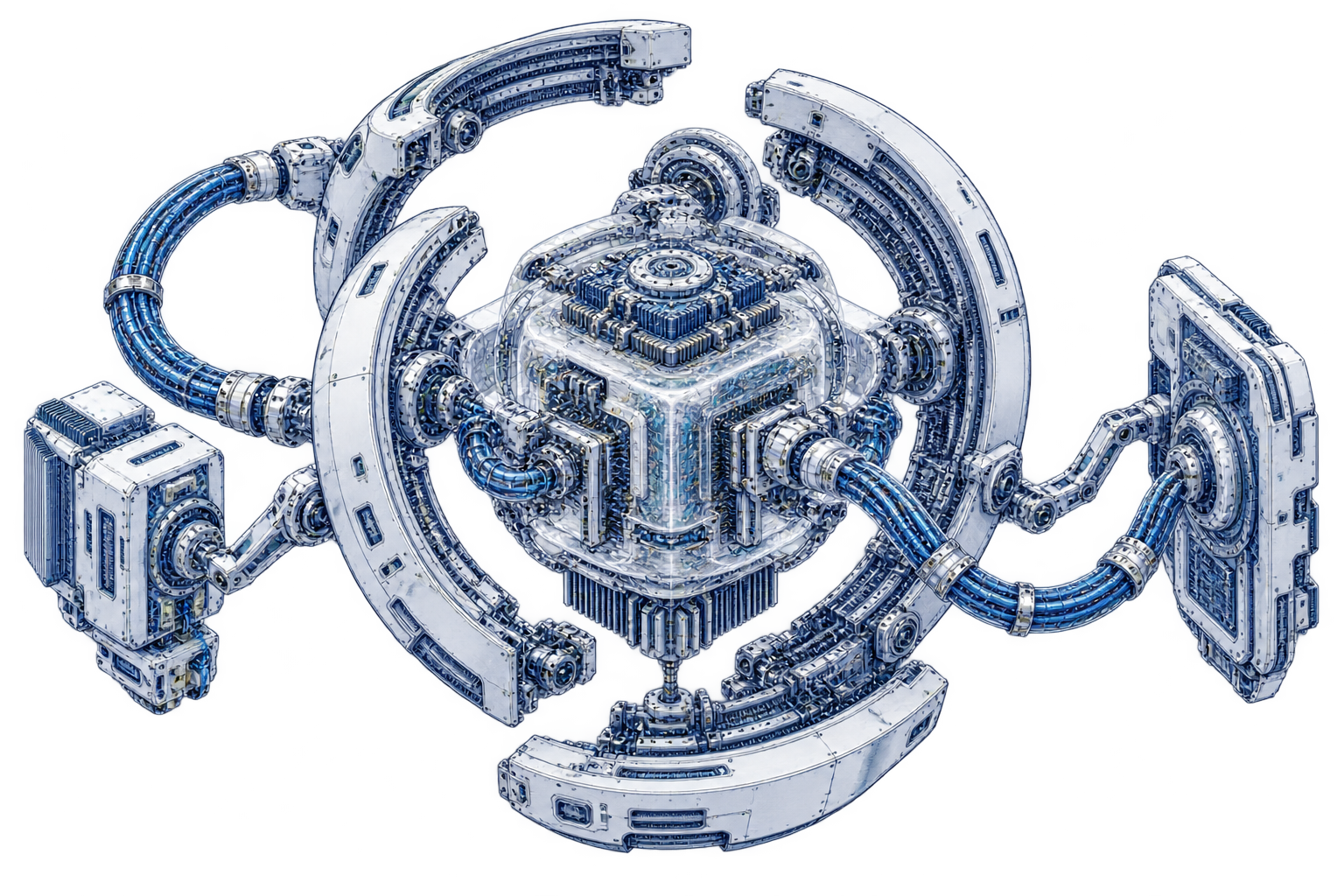
A detailed synthetic compute core in a serviceable mechanical enclosure, illustrating an imagined machine claimant.
Machine identity / Hypothetical legal recognition

C / From property to claimant / 7 min

AI personhood: ownership, legal status and merger

A hypothetical service AI contests ownership, seeks legal personhood and later merges with a human partner. Recognition does not establish consciousness.

The narrative assumes disputed claims of consciousness. Legal recognition in the story does not establish consciousness in present-day AI.

Read scenario

Further scenarios

Other premises.

Additional narratives in the collection. Dates and outcomes belong to their stated assumptions.

Search all articles