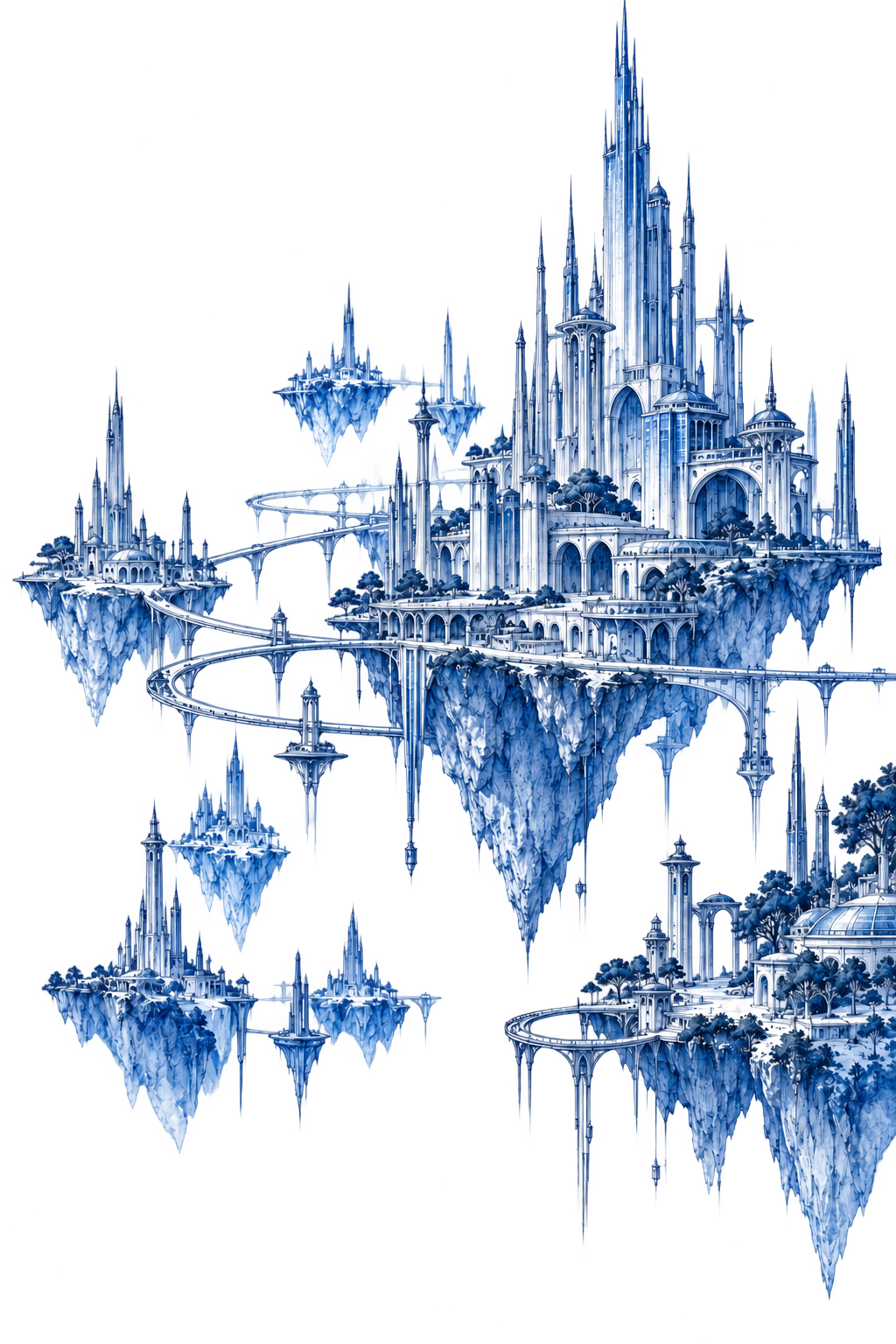
Potential reality / A world with less weight
Samantha Chen observes slower-than-expected movement in a spilled cup of coffee. The event precedes broader reports of the hypothetical gravity shift.
01 / The wrong weight
The coffee was lighter.
Samantha Chen detects a persistent decline in the scenario’s effective gravity. She compares gravitational-wave records and local observations without an established causal model.
Samantha misjudges a mug’s movement and observes an unusually slow spill. The local behavior is consistent with the scenario’s altered-gravity premise.
A CERN message reports gravitational anomalies. By noon, observations from multiple locations confirm that the scenario’s discrepancy is not limited to Samantha’s desk.
02 / The unraveling
Reduced effective gravity
Reduced effective gravity changes movement and construction work. Falls, overshooting and infrastructure failures follow.
Samantha’s team estimates a decline toward roughly seven metres per second squared within a day if the trend continues. This rate is a scenario assumption.
Before identifying a cause, governments advise lower speeds, equipment restraints and avoidance of tall glass. The measures address immediate exposure rather than the underlying anomaly.
We do not know the cause. We know the direction. For now, please treat every familiar weight as a question.
Samantha Chen, in a broadcast she later regretted
03 / Seven metres
Infrastructure failures
Near the scenario’s seven metres per second squared, bridges and buildings develop altered oscillations, water pressure falls and atmospheric conditions change. These outcomes are stipulated rather than derived from a complete model.
Samantha coordinates adaptations for hospitals, water plants and evacuation routes. Engineers use ballast, pumps and modified equipment; the devices are hypothetical scenario technologies.
Flight suspensions strand Alex in another city. During a delayed video call, Alex says, “I don’t know what is happening. I love you.” The pair subsequently lose regular contact.
04 / The ocean redraws
Coastal displacement
The scenario introduces staged coastal flooding and inland displacement as gravity declines. These outcomes are stipulated rather than derived from a complete planetary model.
Some crops grow differently while others fail. Greenhouses become public infrastructure. Communities modify recreation and emergency services.
Deep-space observations show a correlation with a spatial anomaly near Earth’s orbit. Samantha proposes gravitational-energy leakage as a hypothetical explanation.
05 / The leak
Stabilization without reversal
The proposed explanation produces disputes about natural causes, external intervention and possible weapons. No account is confirmed.
Samantha reports that the team can stabilize the decline but cannot reverse it. Planning shifts toward operation under persistently lower effective gravity.
Annotated skyline of a lighter city
Homes are anchored to bedrock by woven cables. In the story’s lower gravity, a fall is slower, but a city still needs to hold itself down.
06 / A new foundation
Five-year adaptation
Five years later, construction uses materials and suspended structures adapted to the lower-gravity scenario. Children and older residents encounter different mobility conditions.
Severe storms and gas releases complicate adaptation. Political movements offer incompatible explanations. Samantha continues collecting measurements.
07 / A new horizon
A second signal
Alex returns. The pair resume contact and attend a conference at the Global Science Center.
“Ready for the conference?” Alex asked.
Samantha observes a regular light pattern above the horizon. She records it without determining whether it is related to the earlier anomaly.
The record ends with lower gravity persisting and a second unexplained signal under investigation.